The best hair fibers in India match your hair colour exactly, cling without looking dusty, hold through heat and sweat with a fixing mist, wash out with normal shampoo, and carry a CDSCO import registration on a properly labelled pack. Judge them on price per application, not price per gram, and buy only from a trusted source.
We make Super Million Hair, so we have a stake in this. We have written the checklist below to be useful whichever pack you buy, and at the end we hold our own product up against it, limitations included.
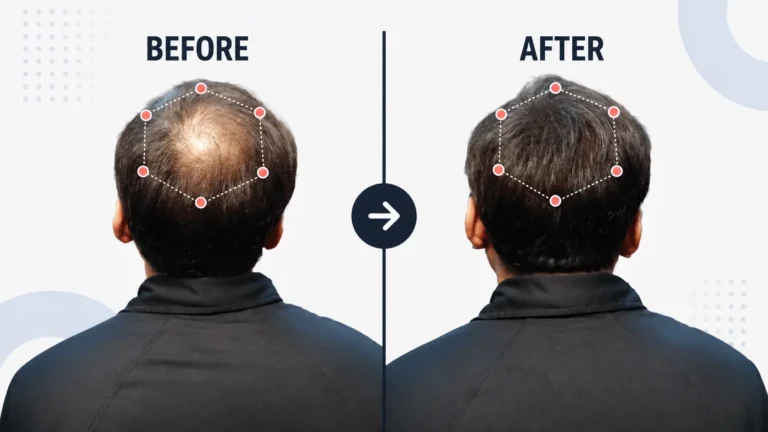
Hair fibers are tiny coloured strands that you sprinkle over thinning areas. They hold on to your existing hair with a static charge, so the scalp shows less and the hair looks fuller. They are a cosmetic concealer. They do not grow hair, treat hair loss or change what is happening at the follicle.
They are also widely used. A 2017 survey of people with hair loss, published in the Journal of the American Academy of Dermatology, looked at how camouflage products such as hair building fibers affect how people feel about their hair.
Because so many packs look alike on a shelf or a product page, it helps to judge them on the same eight points:
Plant-based rayon. Rayon is made from plant cellulose, it can be cut very fine, it takes colour evenly and it carries the natural static charge that makes fibers cling to your own hair. That is why we believe rayon is the best material for hair building fibers, and it is what Super Million Hair has used since 1986.
Many cheaper fibers are bulked out with wood charcoal or other fillers. They look like coloured dust rather than hair, can mark your collar and pillow, and are not good for your hair or scalp. We explain why in why cheap hair fibers are bad for your scalp. If a pack does not say what the fibers are made of, leave it on the shelf.
Very fine fibers, a fraction of a millimetre long, settle between your own strands and lift them slightly, so the area looks denser. Longer or uneven fibers sit on top of the hair and catch the light differently, which is how you get that matte, “painted on” look in photos. Fibers that are too short or crushed behave like powder and clump on the scalp.
Look for a brand that states the fiber length. If it does not, sprinkle a little on the back of your hand in daylight. Good fibers look like very short hairs. Poor ones look like soot.
Fibers stay in place because they carry a static charge and are attracted to your existing hair. That is the whole mechanism. It also explains the main limitation of every fiber on the market: they need something to hold on to.
A 2022 review in the International Journal of Trichology notes that fibers work by clinging to the hair you still have, so they work best where some hair remains, even if it is thin, and do little on a fully bald area. Using more than you need can also clump on the scalp, so build up in light layers.
So when you judge static cling, ask two things:
Good cling means you use less product, which brings down your real cost per application. Poor cling means you keep shaking and keep spending.
Most Indian hair sits somewhere between natural black and dark brown, with lighter browns common in people who colour their hair or spend a lot of time in the sun. A brand that sells well in India needs strong options at the dark end of the range.
When you choose a shade:
Our hair fiber shade guide goes through this with examples of each shade.
This is where many fibers fail in daily life: a sticky Mumbai afternoon, a commute under a two-wheeler helmet, a wedding baraat, a monsoon drizzle.
Static cling is strong in dry conditions. Moisture from humid air, sweat and rain weakens it, and oil on the hair or scalp makes it worse. Fibers on their own can loosen over a long, hot day. That is not a defect in one brand. It is how static works.
The fix is a fixing mist sprayed lightly over the fibers after you apply them. A good mist forms a light hold so the fibers move with your hair instead of shedding. The ISHRS page notes that newer products claim to resist rain, wind and perspiration. In practice, the realistic test is this:
If the fibers are still in place and your collar and pillow are clean, that pack and mist pass the Indian conditions test. If they rub off on your forehead or run in sweat, they do not. Our step-by-step guide to using hair fibers covers application in detail.
One honest note: no fiber is designed for swimming or heavy rain without cover. If your plan involves a pool or a long walk in a downpour, assume you will need to reapply.
They should. Hair fibers are meant to be a daily cosmetic, applied in the morning and washed out at night or the next time you shampoo. A good product leaves with one normal shampoo. You should not need special removers, hot water, scrubbing or a second wash.
Watch out for fibers whose dye stains the scalp, towels or pillowcases, usually a sign of poor dyeing. More on this in why we do not recommend cheap Chinese hair building fibers.
Most hair fibers sold in India are imported, and imported cosmetics need a registration certificate from the Central Drugs Standard Control Organisation (CDSCO) before they can be sold here. This is the single easiest way to separate a properly imported product from a grey-market or fake one.
According to CDSCO’s guidance on registration and import of cosmetics, the label of an imported cosmetic must show the import registration certificate number, preceded by “RC”, “RC No” or “Reg. Cert. No”, along with the name and address of the importer. The same guidance lists a batch or lot number and a use-before or expiry date among the label requirements.
Separately, India’s Legal Metrology (Packaged Commodities) Rules, 2011 require pre-packed goods to declare details such as the name and address of the manufacturer, packer or importer, country of origin, net quantity, month and year of manufacture or import, MRP, and consumer care details, as summarised by the Department of Consumer Affairs.
So before you open a canister, turn it over and look for:
A pack missing several of these is a warning sign, however good the price looks.
The sticker price tells you very little. Canisters come in different sizes, sale prices differ from MRP, and fibers with weak cling get used up faster. The fair comparison is cost per application: the price you actually pay, including delivery, divided by the number of applications the pack gives for a typical area such as the crown or a parting. We show this calculation for our own sizes later in this guide.
Fakes and look-alikes are a real problem in this category, because a canister of coloured fibers is cheap to copy. The safest rule is simple: buy from the brand’s own website or from the listing the brand itself links to.
Signs that a pack may not be genuine:
For Super Million Hair, we sell only on our own website and on Amazon.in. We do not sell through any other marketplace. Our where to buy page lists the official links and explains how to check your pack.
Here is the whole checklist in one table. Score any pack you are considering: 2 points if it clearly meets the “good sign”, 1 if you are unsure, 0 if it shows a red flag. A pack scoring 13 or more out of 16 is worth trying. Below 10, keep looking.
| Criterion | Good sign (2 points) | Red flag (0 points) |
|---|---|---|
| Material | Plant-based rayon, stated clearly on the pack | Material not disclosed, or charcoal-type fillers |
| Fiber length | Length stated; looks like very short hairs on the back of your hand | Looks like dust or coarse flakes |
| Static cling | Grips hair straight away; little falls on shoulders | Slides off; cakes on the scalp |
| Shade range | Black and several browns; a true match in daylight | Few shades, or only lighter tones |
| Hold in sweat and humidity | Fixing mist available; holds through a hot day or helmet ride | No hold product; runs or rubs off |
| Wash-out | Leaves with one normal shampoo; no staining | Stains scalp, towel or pillow |
| Registration and label | RC number, importer, batch, expiry, MRP, consumer care | Missing RC number or importer details |
| Value and source | Clear cost per application; sold by brand or brand-linked listing | Unknown seller; price far below brand’s own |
The checklist leaves out brand names on purpose. Even a well-known brand can be a fake if you buy from the wrong seller. Judge the pack in your hand.
It is only fair to run our own product through the same test, limits included.
Super Million Hair fibers are made in Japan, where the brand has been making them since 1986. They are plant-based rayon fibers, cut to a length of 0.3 to 0.5 mm. That fine cut is what lets them sit between your own strands rather than on top of them.
The fibers carry a static charge that makes them cling to existing hair. Like every fiber, they need some hair to hold on to. They work well on thinning crowns, partings and temples. On a large, fully bald area there is nothing for them to cling to, and no fiber will give you a natural result there.
We offer four shades: Black, Dark Brown, Medium Brown and Light Brown. That covers most Indian hair, and our advice is to choose the darker shade if you are between two. We do not make a grey shade. If you have grey or salt-and-pepper hair, Black or Dark Brown usually blends best. Some brands offer more shades than we do. If your hair is a very light or unusual colour, we may not be the closest match, and we would rather you knew that before you order.
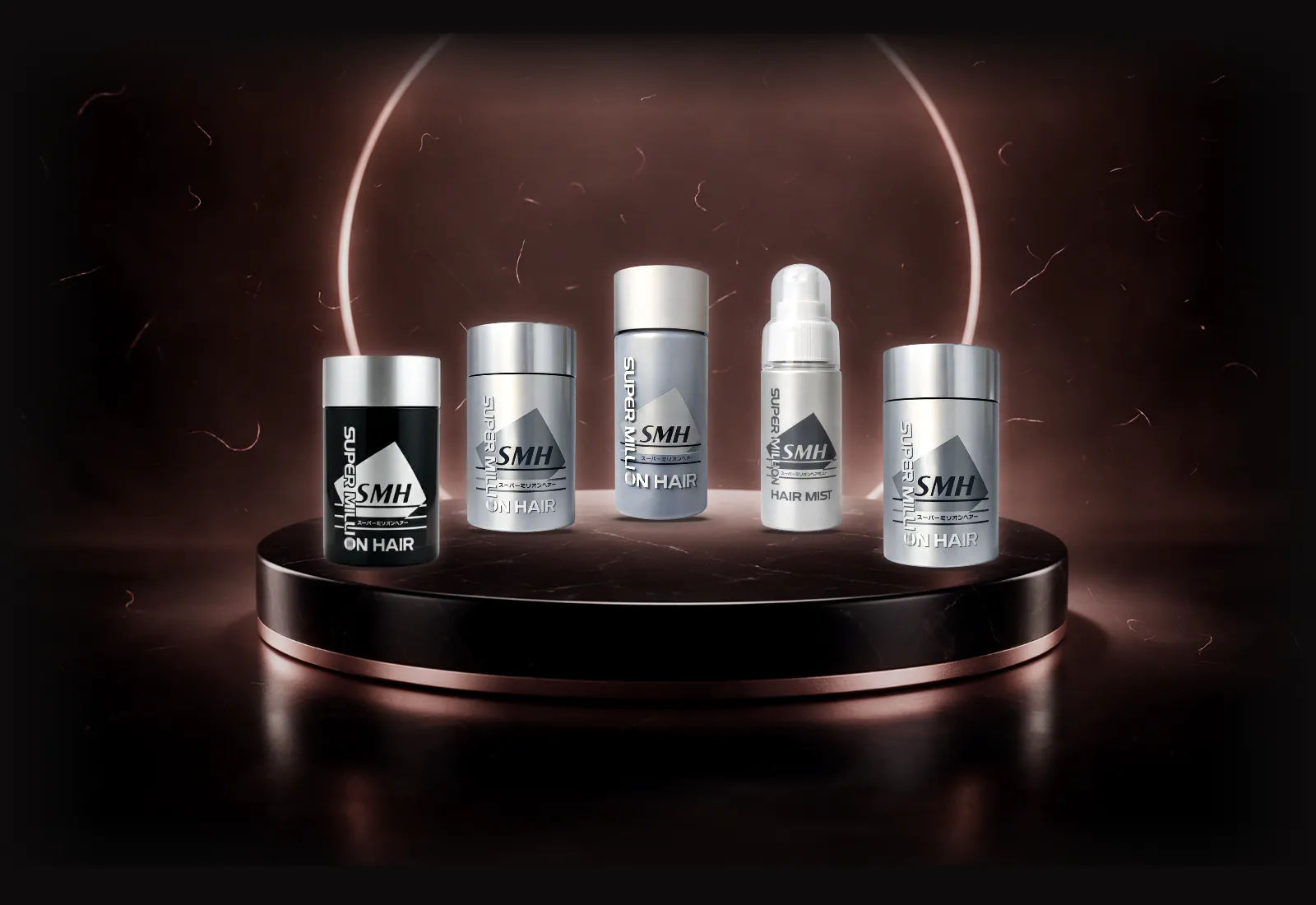
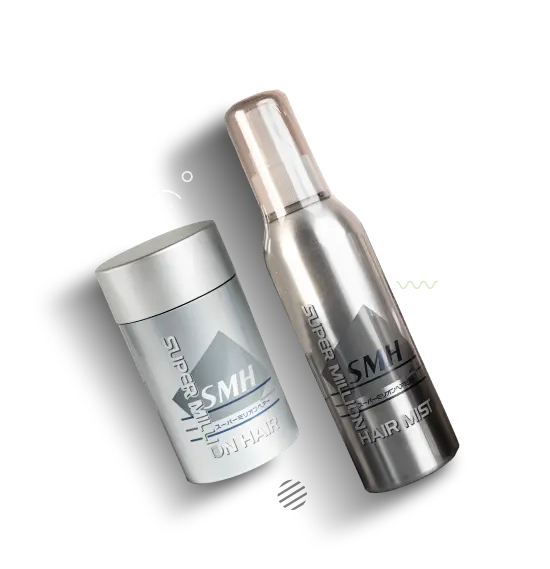
Fibers alone are fine for a normal day indoors. For heat, heavy sweat, helmets, wind or light rain, we recommend finishing with Hard Hair Mist, which locks the fibers in place. If you use heat styling, do that first, then apply the fibers, then the mist. This is a real limitation worth stating plainly: in a hot, sweaty Indian summer, fibers without a mist will not hold as well, and you will need the second product.
Super Million Hair washes out with your regular shampoo. No special remover is needed.
Super Million Hair is sold in India by Yayy Beauty Private Limited under CDSCO import registration RC/COS-004964. You can check that number on your pack along with the importer details, batch, expiry and MRP.
We sell on our website and on Amazon.in only. Shipping is ₹90 per order and free on orders over ₹2,000. Orders are prepaid via PhonePe, and orders placed before 2 pm ship the same day.
Here is the honest summary in one table:
| Criterion | Super Million Hair | Limitation to know |
|---|---|---|
| Material | Plant-based rayon, made in Japan since 1986 | None we know of |
| Fiber length | 0.3 to 0.5 mm | None we know of |
| Static cling | Clings to existing hair by static charge | Cannot cover large fully bald areas |
| Shade range | Black, Dark Brown, Medium Brown, Light Brown | Four shades only; no grey shade |
| Hold | Hard Hair Mist locks fibers against wind, sweat and light rain | Heavy sweat needs the mist, which is an extra cost |
| Wash-out | Regular shampoo | None we know of |
| Registration and label | CDSCO import registration RC/COS-004964 | None |
| Value and source | Website and Amazon.in only | Prepaid orders only |
And the most important limitation of all: Super Million Hair is a cosmetic. It covers thinning hair for the day. It does not regrow hair or treat hair loss. If your hair loss is sudden, patchy or painful, see a dermatologist.
Using the method above, here is the real cost of each size at our current sale prices (October 2026). Application counts are approximate and assume a typical thinning area. A wide crown will use more, a small parting less.
| Size | Sale price (MRP) | Approx. applications | Cost per application (sale price) | Cost per application incl. shipping |
|---|---|---|---|---|
| 10 g (black canister) | ₹599 (₹1,495) | 15 | about ₹40 | about ₹46 (₹90 shipping) |
| 15 g (silver canister) | ₹1,496 (₹1,995) | 22 | about ₹68 | about ₹72 (₹90 shipping) |
| 25 g (silver canister) | ₹1,871 (₹2,495) | 37 | about ₹51 | about ₹53 (₹90 shipping) |
| 40 g (silver canister) | ₹2,696 (₹3,595) | 60 | about ₹45 | about ₹45 (free shipping) |
A few things stand out, and we would rather point them out than leave you to find them:
The best fiber for Indian hair is one with a true black or dark brown match, a fine cut that looks like hair rather than powder, good static cling, and a fixing mist for heat and sweat. It should wash out with normal shampoo and carry a CDSCO import registration number on the pack.
Plant-based rayon can be cut very fine, takes colour evenly and holds a natural static charge, so it clings to your hair and looks like hair. Cheap fibers are often made with wood charcoal or other fillers that look like dust, can clump and mark clothes, and are not good for your hair or scalp.
Most Indian hair matches Black or Dark Brown. Check your shade in daylight and choose the darker of two shades if you are unsure. Use one shade only, and if you have grey or salt-and-pepper hair, Black or Dark Brown usually blends best.
Check the label for an RC import registration number, the importer’s name and address, a batch number, an expiry date, the MRP and consumer care details. Buy from the brand’s own website or the listing it links to, and be wary of prices far below the brand’s own sale price.
Buy from the brand’s official website or its official marketplace listing. Super Million Hair is sold only on supermillionhair.in and on Amazon.in. Our where to buy page lists the official links.
No. Hair fibers are a cosmetic concealer that makes thinning areas look fuller for the day. They do not regrow hair or treat hair loss. If your hair loss is sudden, patchy or painful, see a dermatologist.
If our checklist has helped you narrow things down, you can order Super Million Hair fibers or the fibers and Hard Hair Mist combo on our website, or buy on Amazon.in: fibers, fibers and mist combo or Hard Hair Mist 60 ml. Not sure about your shade? Message us on WhatsApp at +91 84849 43970, any time of day.

Written by
Made in Japan · Since 1986
Plant-based fibers that cling to your own hair with a natural static charge — then locked in by our Hard Hair Mist against wind, sweat and rain.
Keep reading
Hair loss is far more common than most people admit. Androgenetic alopecia affects up to 50% of men and roughly 19% of
Actor Vindu Dara Singh is a user of Super Million Hair Building Fibers along with many actors and production houses – and
World’s largest selling hair building fibers and the best thinning hair solution, Super Million Hair Fibers and Mist Combo is in the
Professional Beauty Exhibition is the biggest cosmetics exhibition that happens in India and around the world. Super Million Hair got an amazing